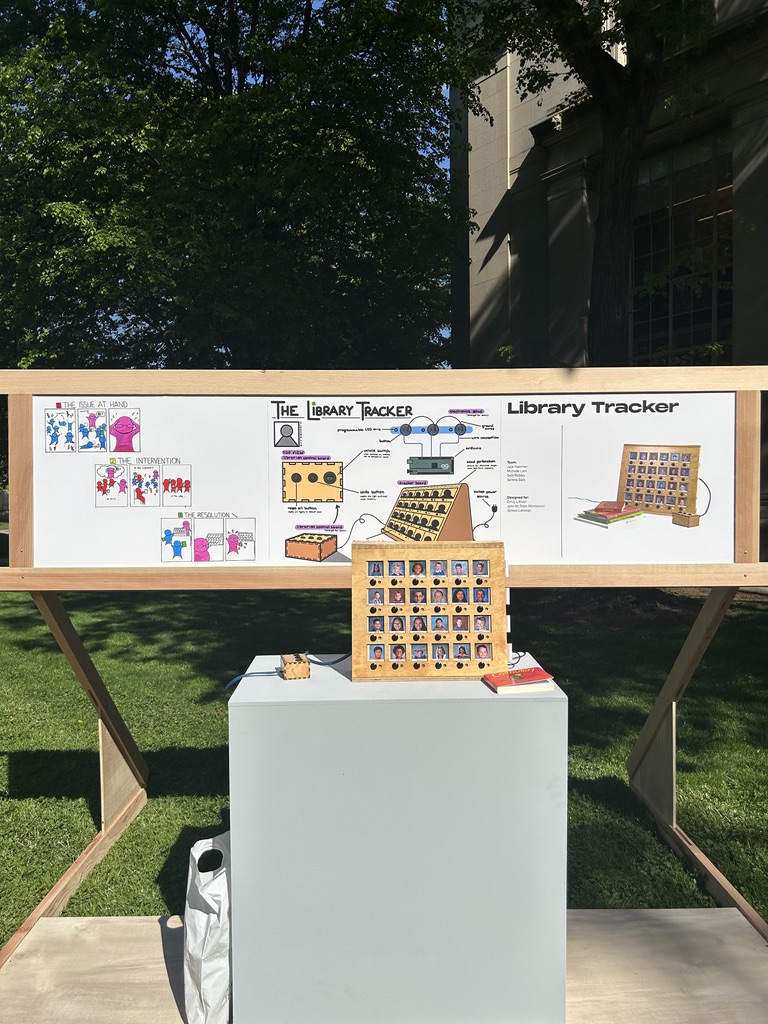
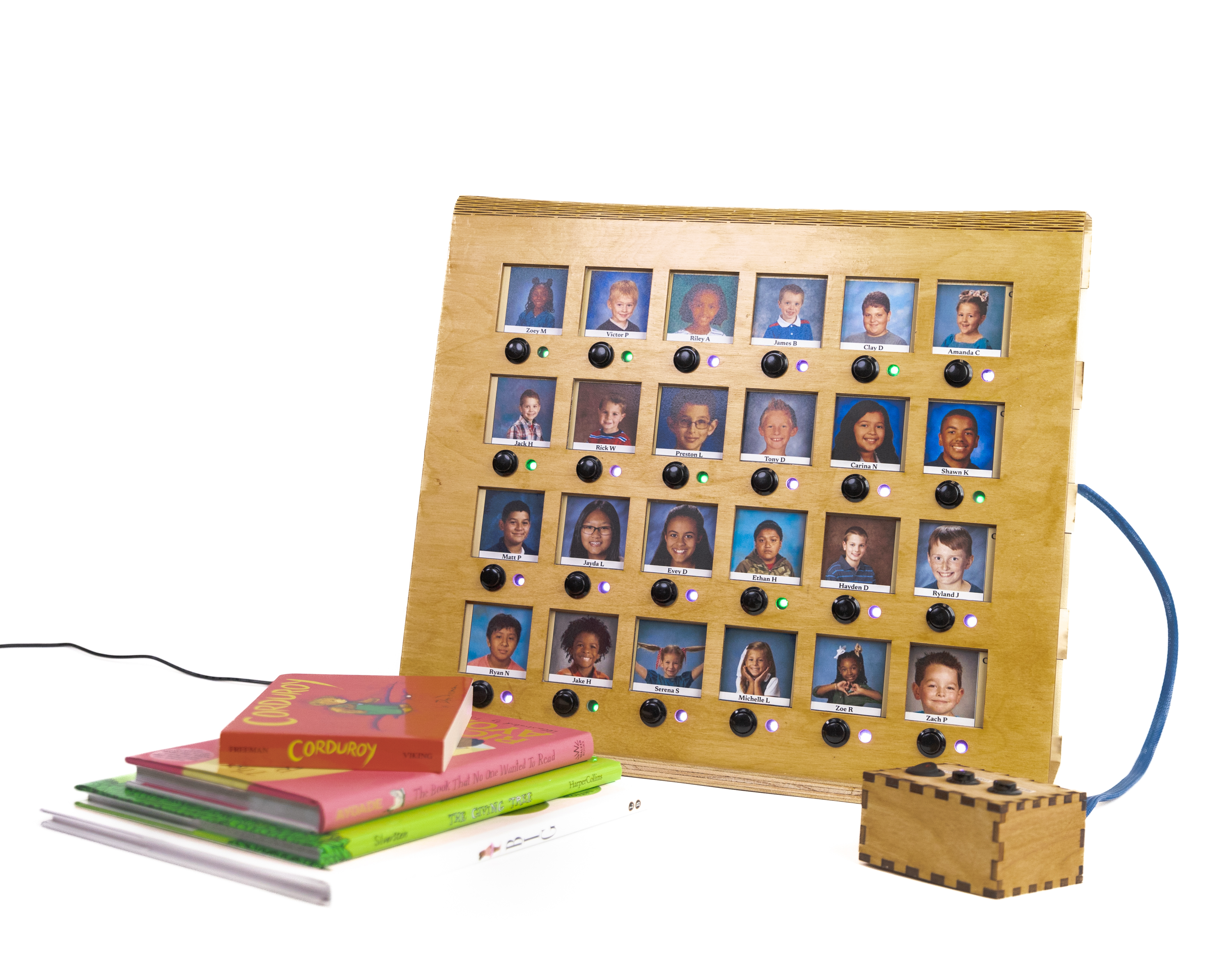
In May 2024, I (with a team of three others) built a Library Tracker tool as part of MIT’s 2.00 course. Our client was an elementary school librarian who struggled to track when her younger, special-needs students completed tasks—like checking out books or returning overdue materials—in a chaotic classroom environment.
We were asked to design a low-tech, privacy-conscious, and classroom-friendly solution that would make task-tracking easier.
Key Features
-
Board Body - Layered 1/8" plywood with slots for name-tag sliders. - RGB LEDs beneath each student’s photo and name to indicate task completion. - One plywood sheet was laser-cut for panel bending to achieve a single, integrated front panel.
-
Librarian Control Box - Teacher-activated unlock switch prevents unauthorized changes. - Dedicated buttons to mark tasks complete, undo the last action, and reset all lights.
-
Electronics - Arduino Mega for ample GPIO to drive LEDs and buttons. - Hand-soldered harnesses for power, ground, and signal distribution across the board.
What I Learned
Working on the Library Tracker reinforced the value of scoping to the user’s real constraints: - How to translate stakeholder interviews into concrete requirements for a classroom setting. - Practical wiring, harnessing, and GPIO planning on the Arduino Mega for multi-LED/button systems. - Designing for reliability and teacher control (locks, reset/undo flows) in a chaotic environment. - That low-tech, robust interactions can be more effective than complex software when the audience is young students.